GANXING Technical Guide
How to Wet Polish Stone Safely: Water, Diamond Pads and Slurry Control
Learn why continuous point-of-contact water, correct pad progression, GFCI protection and slurry housekeeping belong to one wet-polishing process.
Quick answer
Wet polishing is a controlled system: water must reach the pad–stone interface continuously, the tool and electrical supply must be approved for wet use with GFCI protection, and slurry must be contained and removed before it dries. Water reduces airborne dust and pad loading, but does not replace material assessment, exposure controls or PPE.
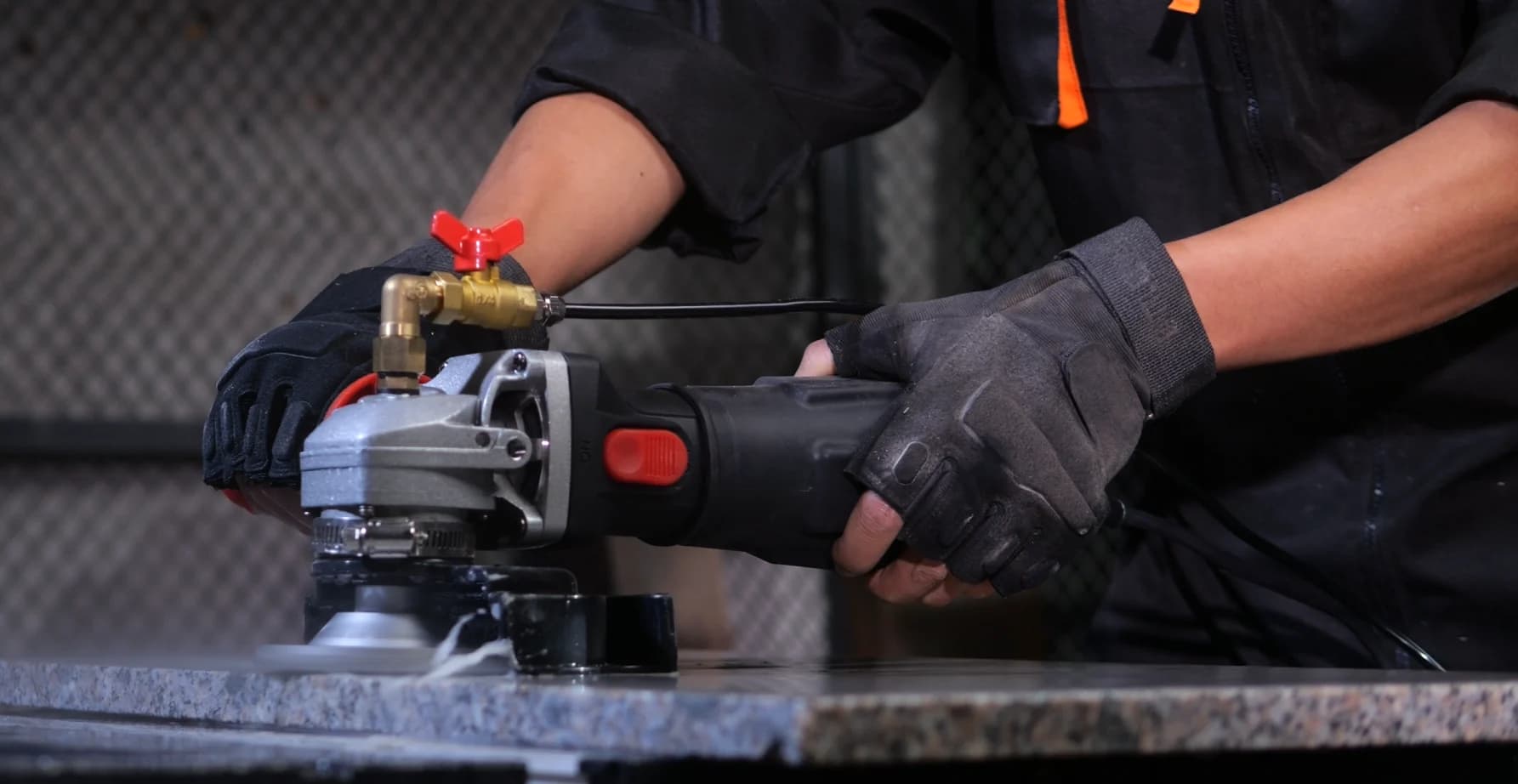
Water belongs at the interface
A wet surface is not enough. Water should be delivered continuously to the point where the abrasive contacts the stone. This supports dust containment, carries away swarf, limits pad loading and helps manage process heat.
Flow must follow the tool and pad manufacturer’s instructions. Too little water can leave dry zones; uncontrolled excess can spread slurry, obscure visibility and increase electrical or slip hazards.
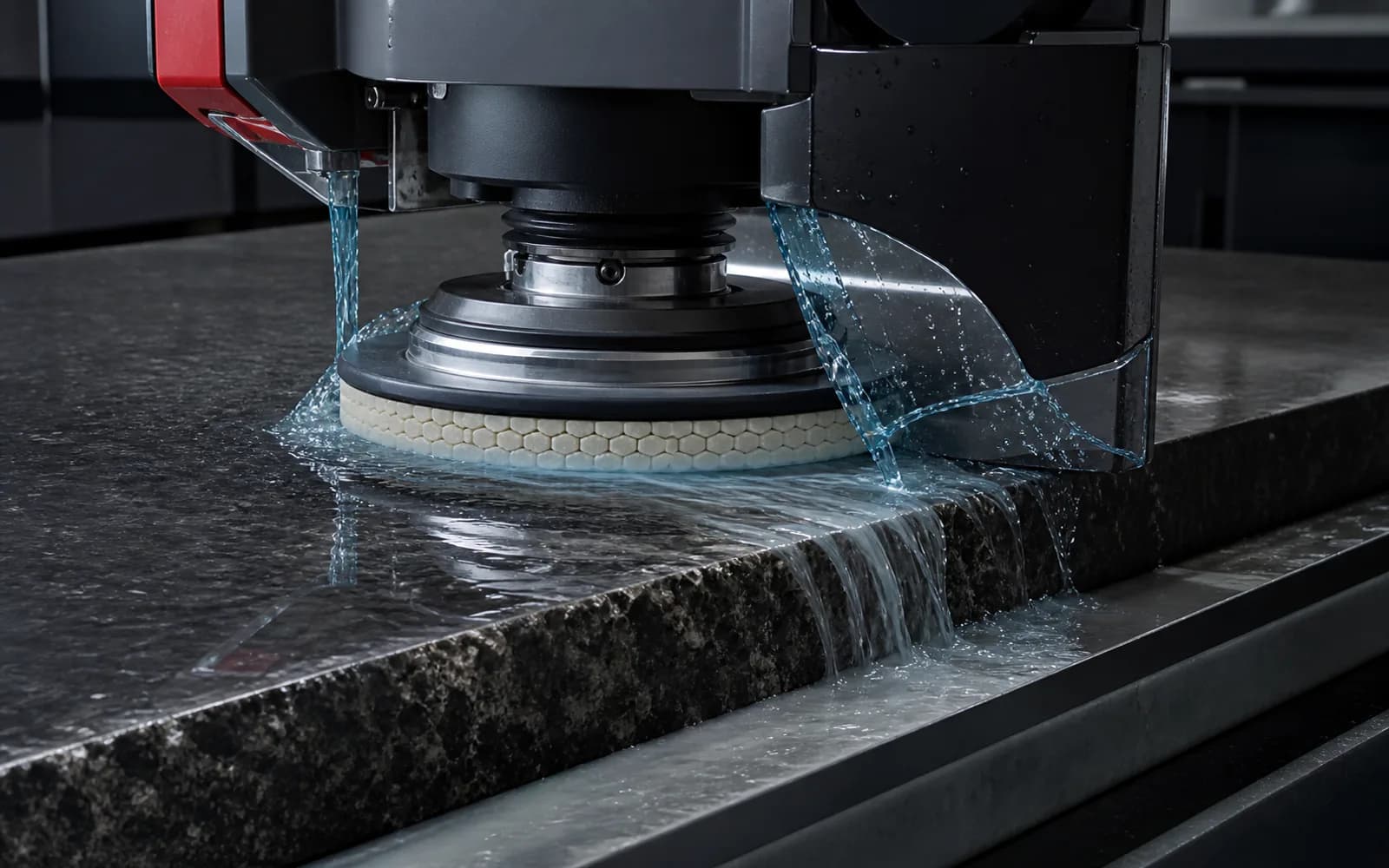
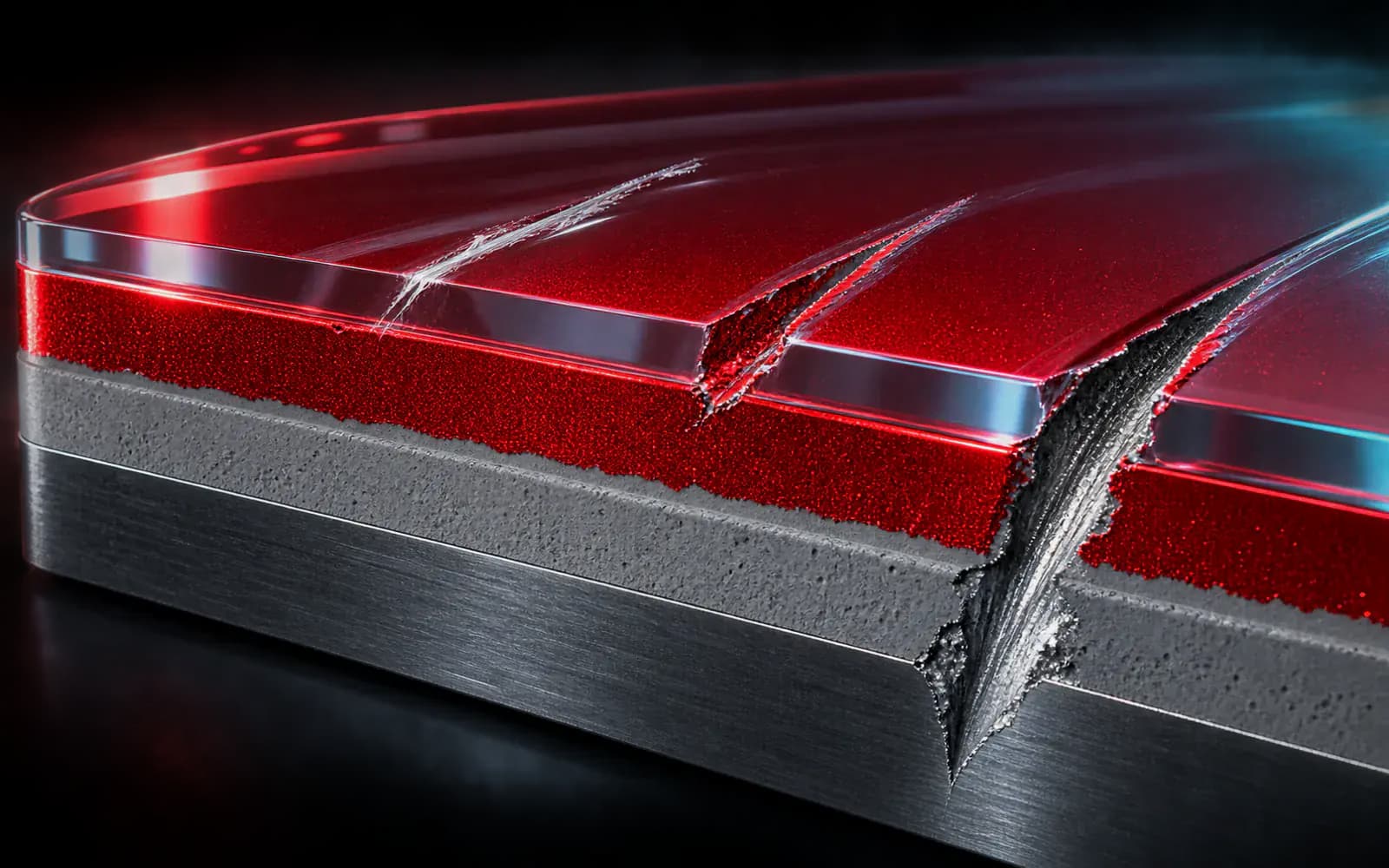
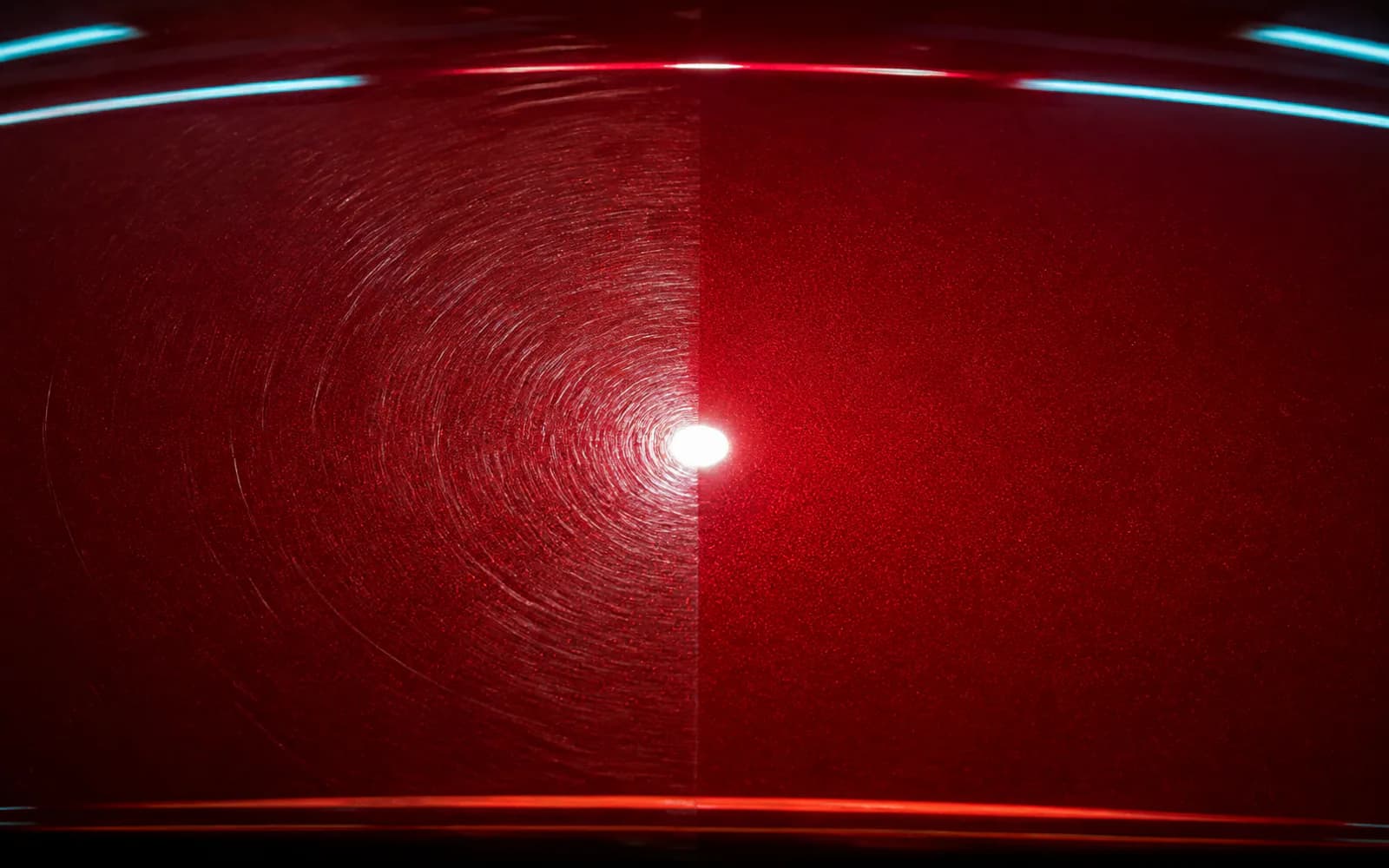
Select a process state to compare the material response.
Build the wet-work safety chain before starting
- 01
Identify the stone
Natural and engineered stones differ in silica content, resin behavior, porosity and sensitivity. Obtain supplier information before selecting the process.
- 02
Use a wet-rated tool and GFCI
Keep plugs, receptacles and extension connections dry and off the ground. Test protective devices as instructed; never improvise a water feed on a dry-only tool.
- 03
Inspect water delivery and guarding
Check hoses, valves, pad condition, splash control and water delivery before the pad touches stone.
- 04
Plan slurry capture
Contain runoff, protect adjacent surfaces and remove slurry before it dries and becomes airborne again.
Progress diamond pads by scratch evidence
| Stage | Purpose | Move on when |
|---|---|---|
| Shaping / damage removal | Correct edge geometry or remove the target defect | Geometry is correct without uncontrolled chipping |
| Scratch refinement | Replace the previous diamond scratch uniformly | No isolated coarse scratches remain after cleaning |
| Gloss development | Reduce haze and reveal the material’s finish | Gloss and color are even from multiple viewing angles |
Pad sequences are product-specific
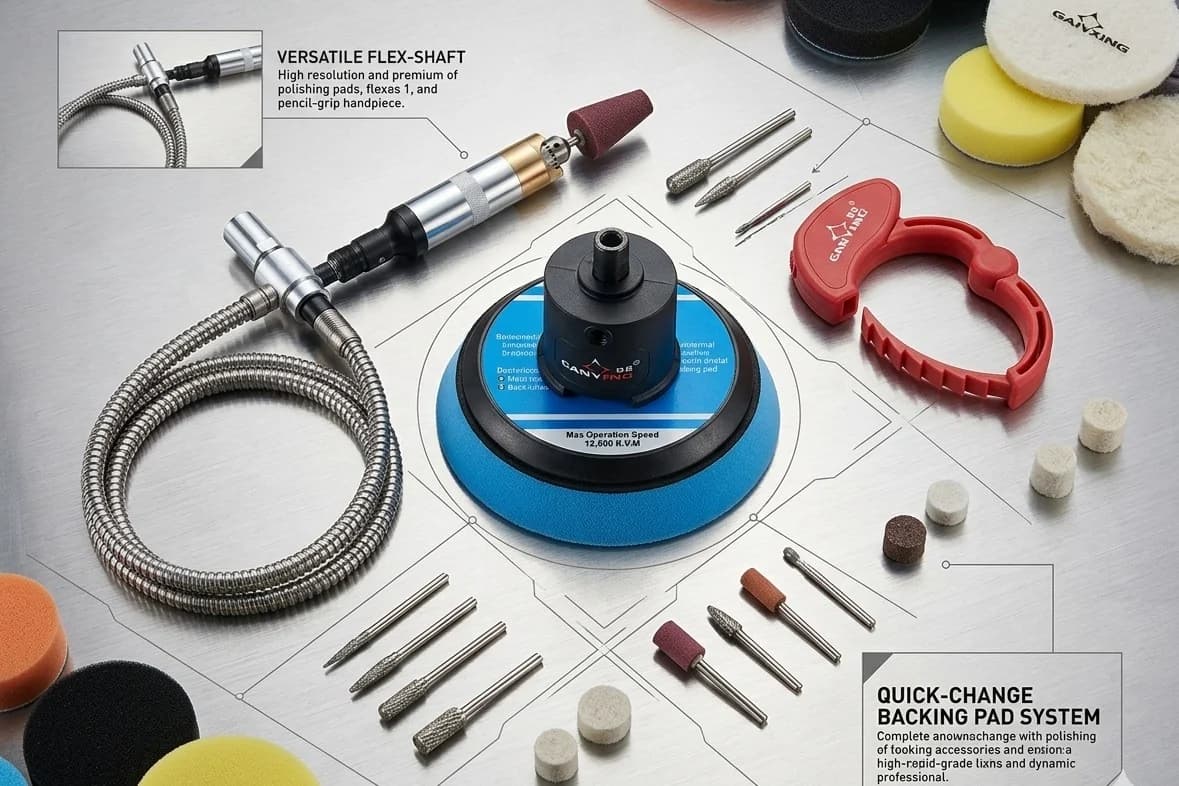
Follow the diamond-pad manufacturer’s sequence, speed and water requirements. Do not assume pad colors or nominal numbers are interchangeable between systems.
Wet does not mean risk-free
- Engineered stone can contain very high crystalline silica; use substitution and engineering controls where feasible.
- Verify continuous wetting and combine controls when exposure assessment or local rules require it.
- Never dry sweep or use compressed air on silica-containing residue; use approved wet cleanup or HEPA methods.
- Use material-appropriate eye, hearing, skin and respiratory protection based on the risk assessment.
Electrical protection is non-negotiable
If a plug or receptacle becomes wet, do not touch or unplug it directly. Isolate power at the breaker and follow the tool manufacturer’s emergency instructions.
Safety note: This guide provides a decision framework and does not replace an on-site assessment of the surface, coating thickness, material compatibility, or the machine manual. Test a small area first and use appropriate PPE.